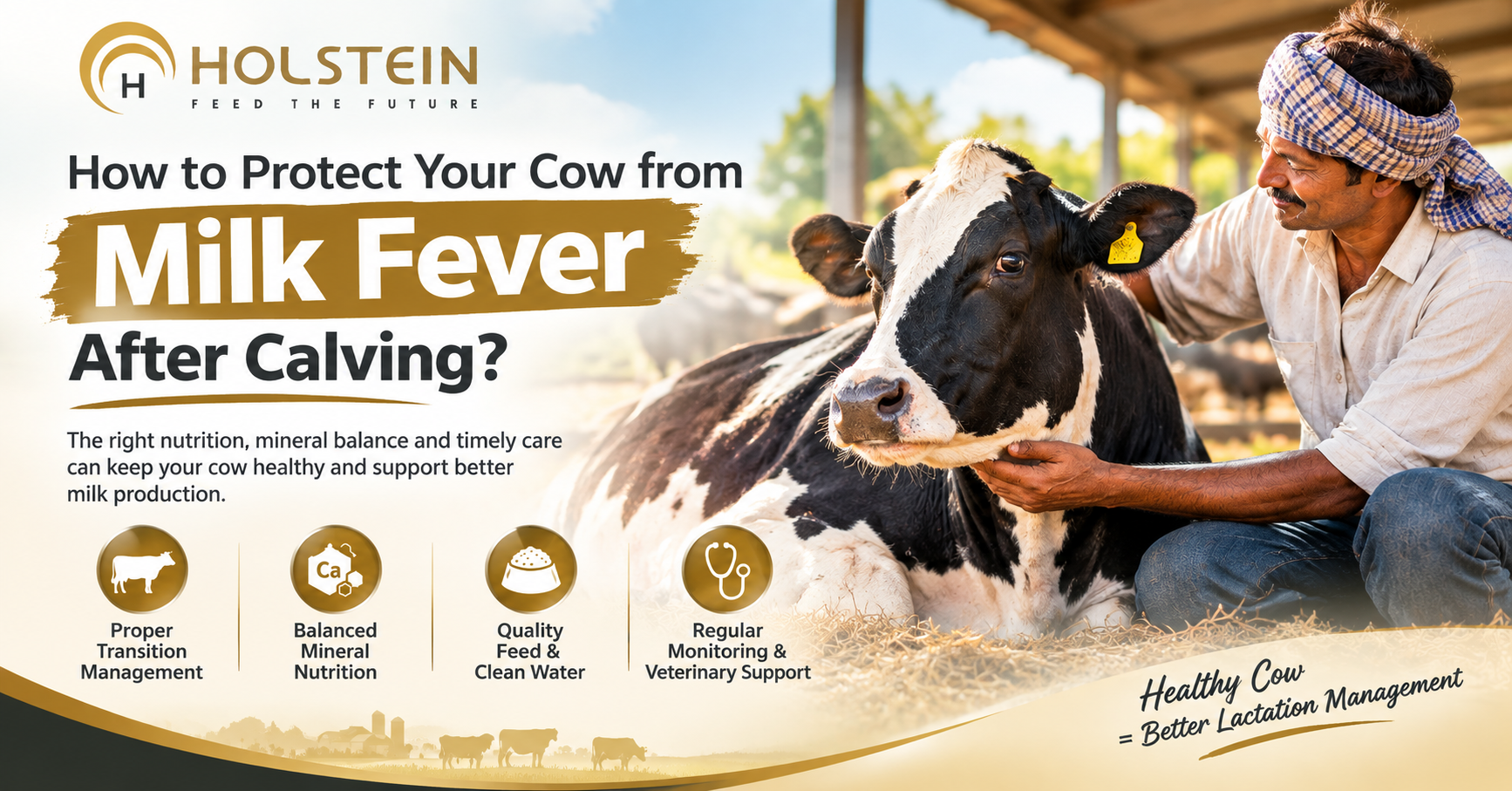
The period immediately after calving is one of the most critical stages in a dairy cow’s production cycle. After calving, the cow’s body undergoes major changes, and the demand for nutrients—especially calcium—increases rapidly due to the start of milk production.
If the cow cannot maintain adequate calcium levels, she may develop Milk Fever (Hypocalcemia). Therefore, proper transition management, balanced nutrition, mineral management, and regular monitoring are important for maintaining cow health after calving.
What Is Milk Fever in Cows?
Milk Fever is a metabolic disorder associated with a low level of calcium in the blood, commonly occurring around calving.
When milk production begins, a significant amount of calcium is transferred from the cow’s body into the milk. The cow must quickly adjust her calcium metabolism to meet this increased demand.
If this adjustment is not adequate, blood calcium levels can fall and clinical signs of Milk Fever may appear.
Why Does the Risk of Milk Fever Increase After Calving?
The risk increases around calving because the cow suddenly needs much more calcium for colostrum and milk production.
Several factors can contribute to the risk, including:
- High milk production
- Inadequate or unbalanced nutrition
- Poor mineral management
- Improper transition-period feeding
- Inappropriate calcium and phosphorus balance
- Lack of proper monitoring around calving
- Previous history of metabolic disorders
Common Signs of Milk Fever
Early recognition is important because Milk Fever can progress rapidly.
Possible signs include:
- Reduced appetite
- Weakness or lethargy
- Difficulty standing or walking
- Stiffness or unusual posture
- Cold ears and extremities
- Reduced body temperature
- Frequent lying down
- In severe cases, inability to stand
If a cow shows signs of severe weakness or is unable to stand after calving, contact a qualified veterinarian immediately. Do not attempt intravenous calcium treatment without professional veterinary guidance.
How Can You Help Prevent Milk Fever?
1. Start Management Before Calving
Milk Fever prevention should not begin only after the cow has calved. Proper management should start during the transition period before calving.
The final weeks before calving are important for preparing the cow’s metabolism for the demands of lactation.
A properly formulated transition ration can help support:
- Calcium metabolism
- Rumen function
- Feed intake
- Energy balance
- Overall metabolic health
2. Focus on Balanced Mineral Nutrition
Calcium is important, but it should not be considered in isolation.
Proper management of minerals such as calcium, phosphorus and magnesium, along with the overall ration, is important for dairy cows around calving.
Mineral supplementation should be based on the cow’s ration, production level, stage of lactation, and professional nutritional advice.
3. Consider DCAD Management
For close-up dry cows, Dietary Cation-Anion Difference (DCAD) management may be used as part of a properly formulated transition feeding program.
An appropriately designed negative-DCAD diet can help prepare the cow’s calcium-regulation system for the increased demand associated with lactation.
However, DCAD diets should be formulated and monitored carefully. Farmers should consult a veterinarian or qualified animal nutritionist before implementing such a program.
4. Avoid Sudden Feed Changes
The cow’s nutritional requirements change significantly around calving. Sudden changes in feed can affect feed intake and rumen function.
A properly planned transition from the dry-cow ration to the lactation ration can help the cow adapt to the nutritional demands of early lactation.
Always provide access to:
- Clean and fresh drinking water
- Good-quality forage
- Properly formulated concentrate feed
- Adequate minerals according to the ration
5. Monitor Feed Intake After Calving
Feed intake is an important indicator of a cow’s condition after calving.
If a cow suddenly reduces her feed intake, appears unusually weak, or shows changes in normal behavior, the situation should be investigated rather than ignored.
Reduced feed intake can be associated with several postpartum problems, including metabolic and digestive disorders.
6. Closely Monitor the Cow After Calving
The first few days after calving require careful observation.
Farmers should regularly check:
- Feed intake
- Water intake
- Standing and walking behavior
- Rumen activity and cud chewing
- Milk production
- Manure consistency
- General alertness
- Any unusual behavior or physical changes
Early detection allows veterinary intervention when necessary.
Milk Fever vs. Ketosis
Milk Fever and Ketosis are two different metabolic disorders that can occur around the transition and early-lactation period.
| Factor | Milk Fever | Ketosis |
|---|---|---|
| Main issue | Low blood calcium | Negative energy balance and elevated ketone bodies |
| Common period | Around calving | Usually early lactation |
| Common signs | Weakness, difficulty standing | Reduced appetite, reduced production, lethargy |
| Main management focus | Calcium metabolism and veterinary care | Energy balance and nutritional management |
| Prevention focus | Proper transition and mineral management | Adequate energy intake and transition management |
A cow can experience more than one postpartum health challenge, so proper diagnosis is important.
Why Is the Transition Period So Important?
The 21 days before calving and the first 21 days after calving are often considered a critical transition period.
During this time, the cow moves through major physiological changes:
Dry Period → Pre-Calving → Calving → Early Lactation
Her requirements for energy, minerals, protein, and other nutrients change significantly.
Therefore, transition management should focus not only on milk production but also on:
- Rumen health
- Feed intake
- Energy balance
- Mineral management
- Calcium metabolism
- Immune function
- Overall cow comfort
Common Feeding Mistakes to Avoid
Farmers should avoid common management mistakes around calving, such as:
- Giving calcium or mineral supplements without professional advice
- Making sudden changes to the ration
- Feeding poor-quality or unbalanced feed
- Ignoring reduced feed intake
- Failing to monitor cows after calving
- Delaying veterinary attention when serious symptoms appear
- Focusing only on milk production instead of overall transition management
Holstein Transition Management
A properly managed transition program can help prepare the cow for the nutritional demands of calving and early lactation.
Holstein Transition Pre 20 is designed for the pre-calving transition stage, while Holstein Transition Post 20 is intended for nutritional management after calving.
Farmers should use these products according to the recommended feeding guidelines and their animal’s nutritional requirements. For an individualized ration or supplementation plan, consult a veterinarian or qualified animal nutritionist.
Remember that successful transition management is not based on a single product. It involves the complete feeding program, forage quality, mineral balance, water availability, cow comfort, feed intake, and regular health monitoring.
Conclusion
Prevention of Milk Fever starts before calving—not only after calving.
Proper transition management, balanced nutrition, appropriate mineral management, adequate water, good-quality feed, and regular monitoring can help support a healthy transition into lactation.
For dairy farmers, the goal should be to prepare the cow properly before calving and closely monitor her during the critical early-lactation period.
Healthy Transition = Healthy Cow + Better Lactation Management
If your cow is approaching calving, start planning her transition nutrition today. If you notice weakness, difficulty standing, or other unusual symptoms after calving, contact a veterinarian promptly.
